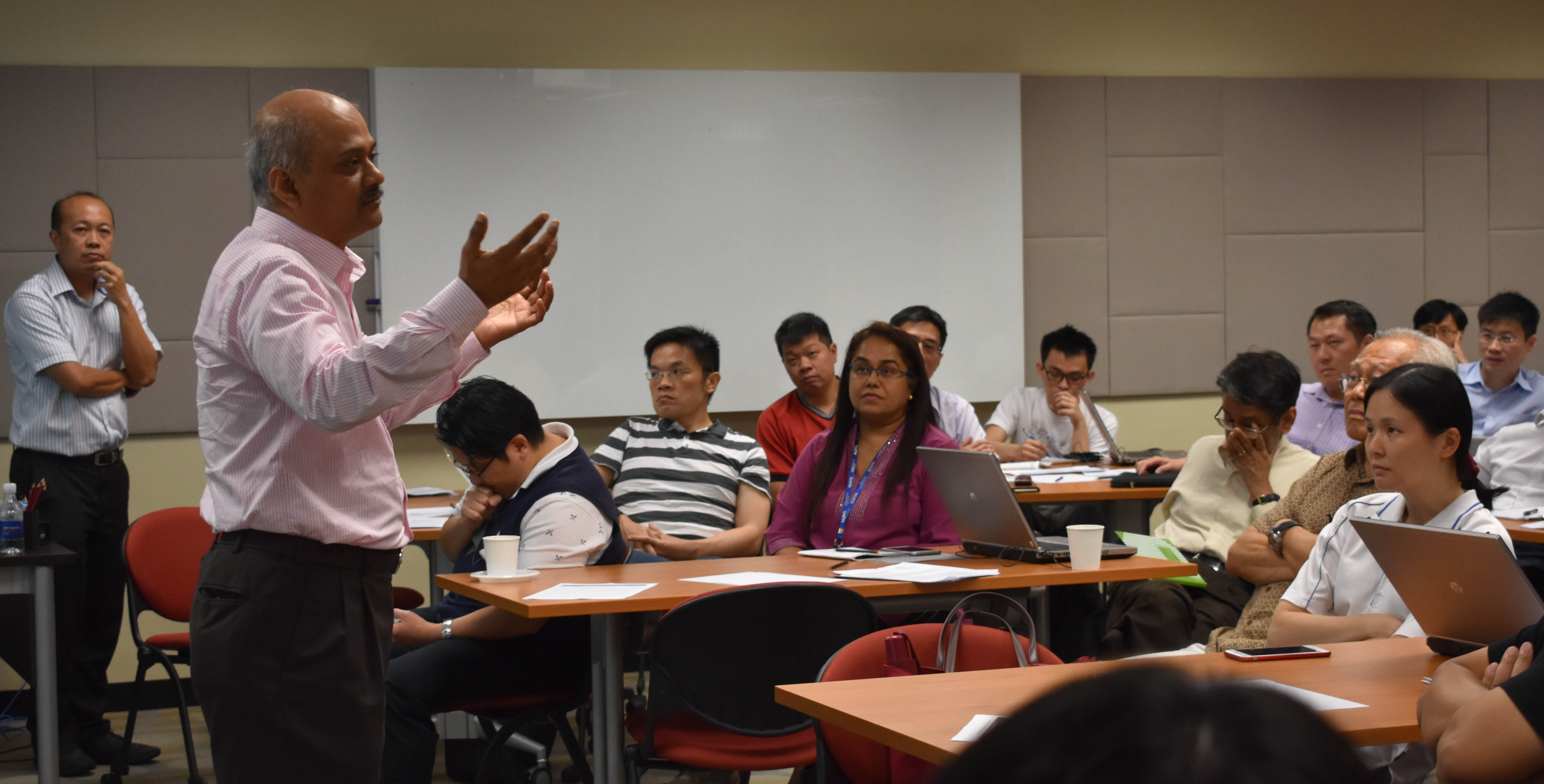
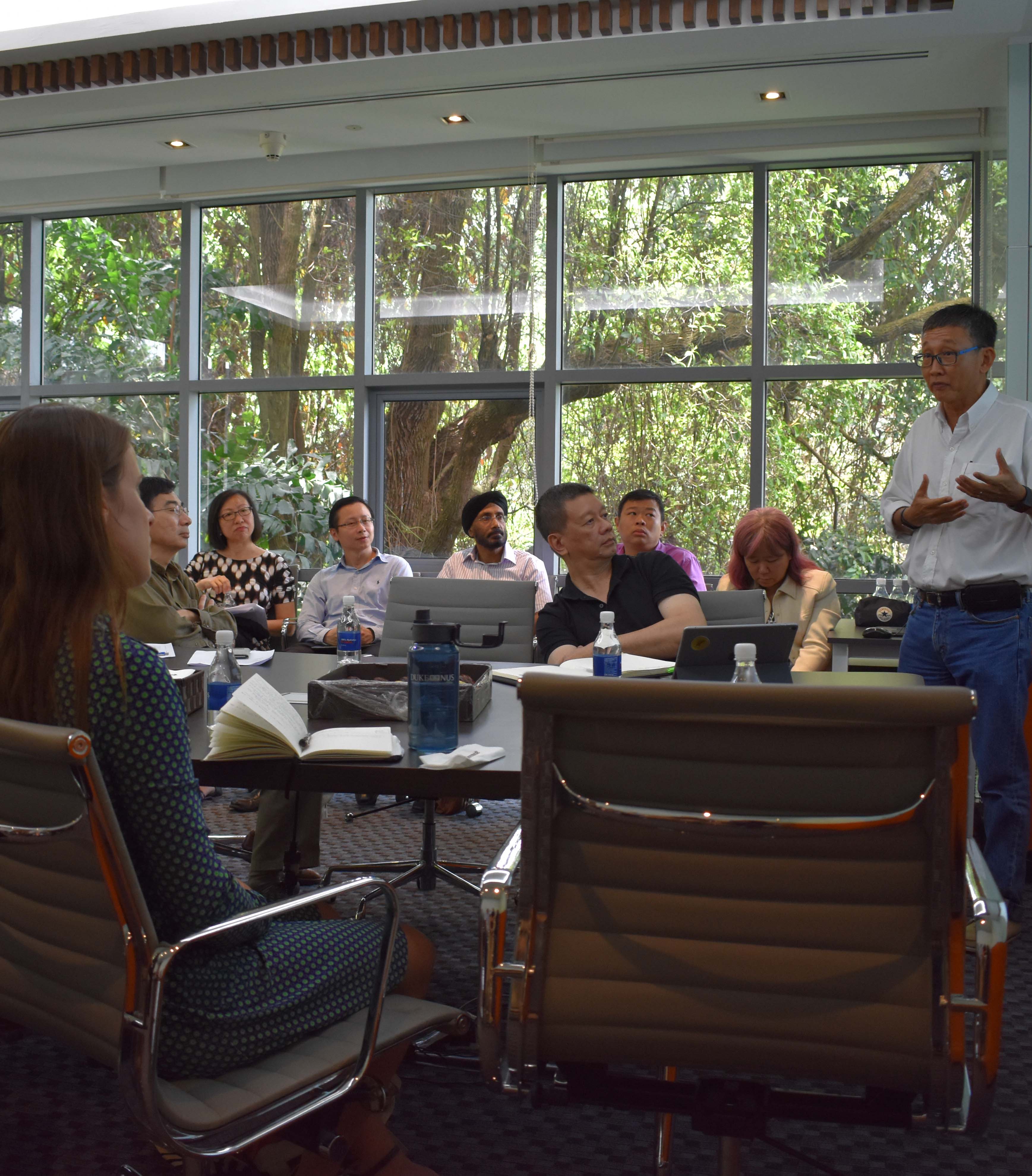
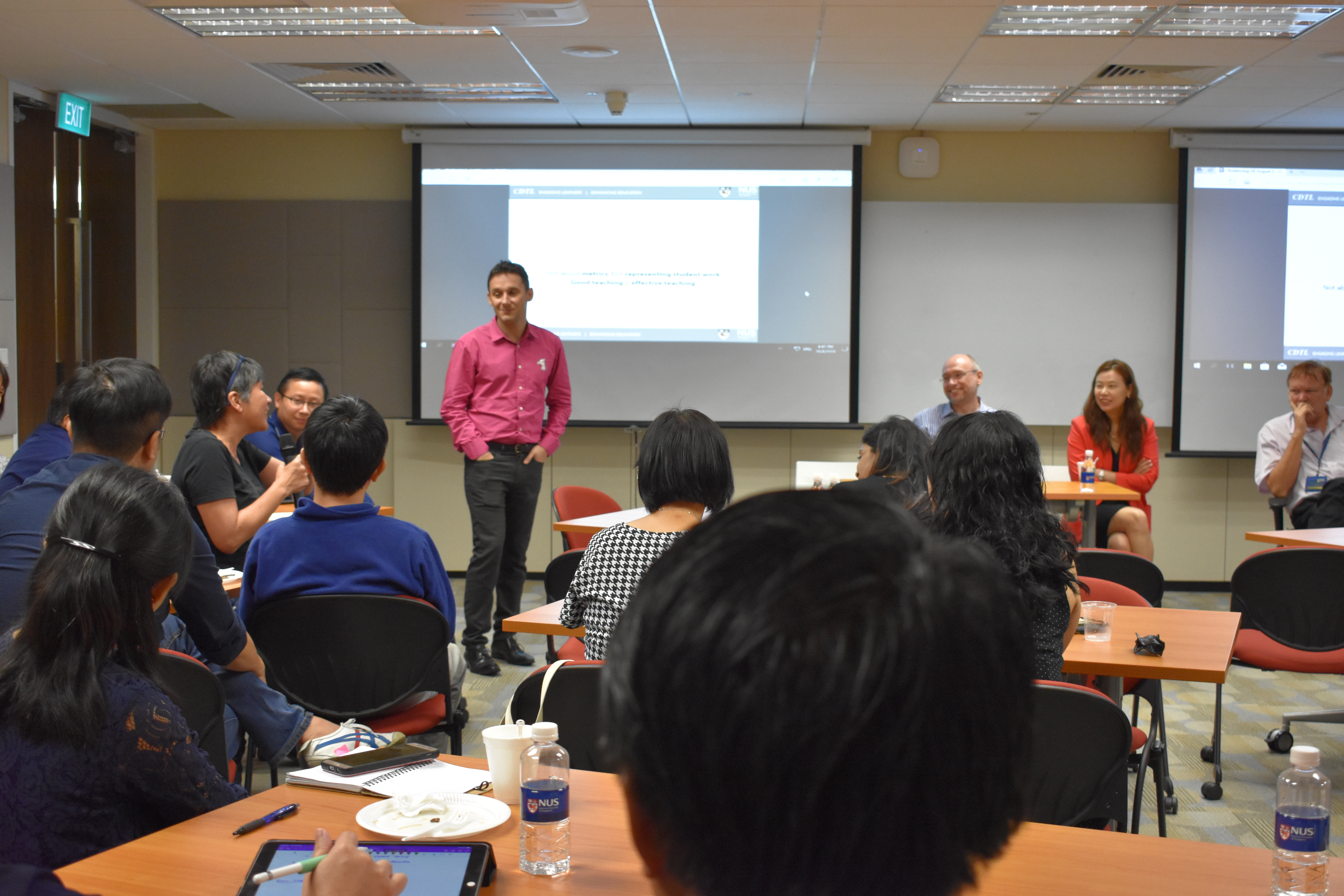
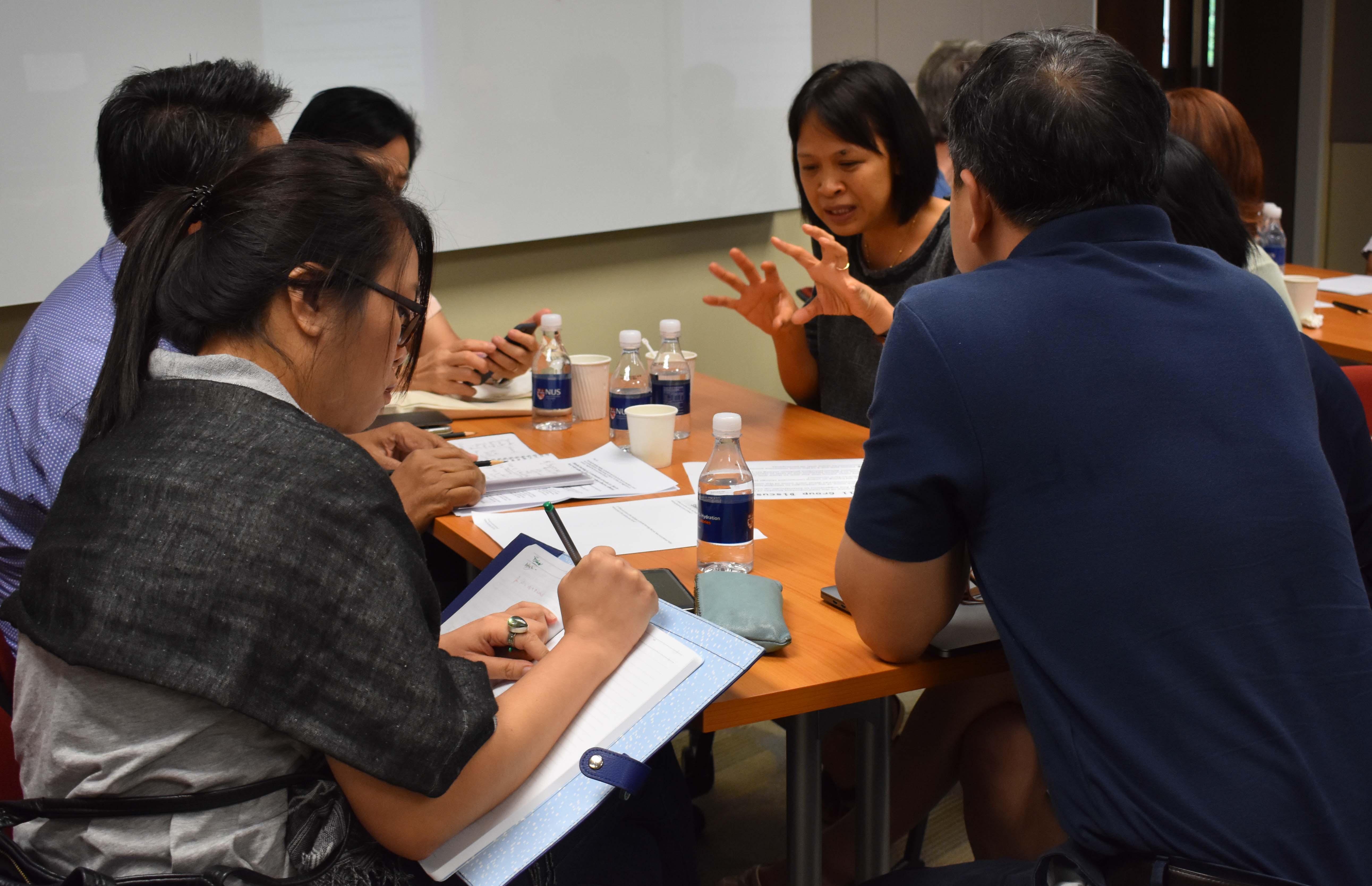
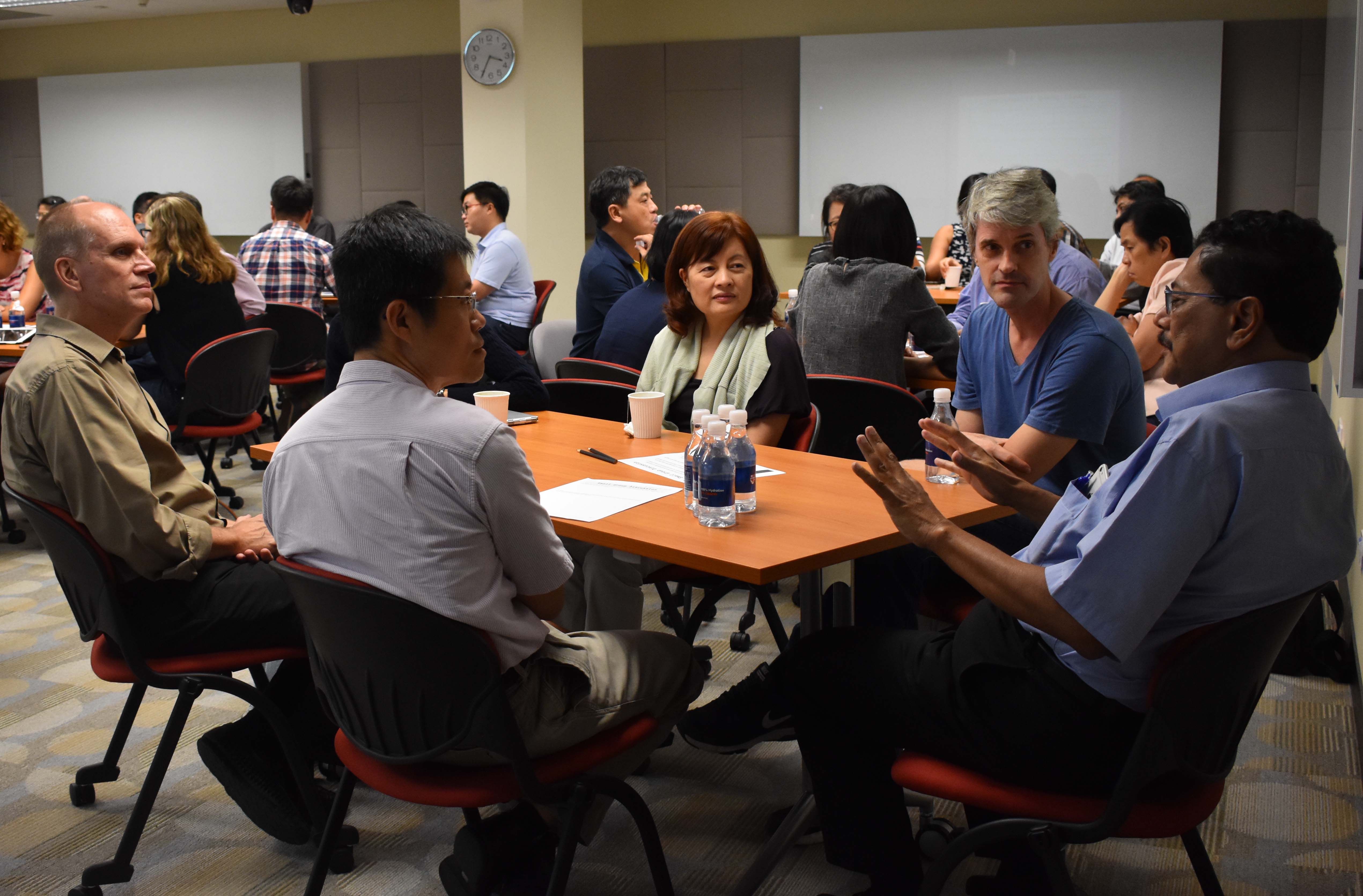
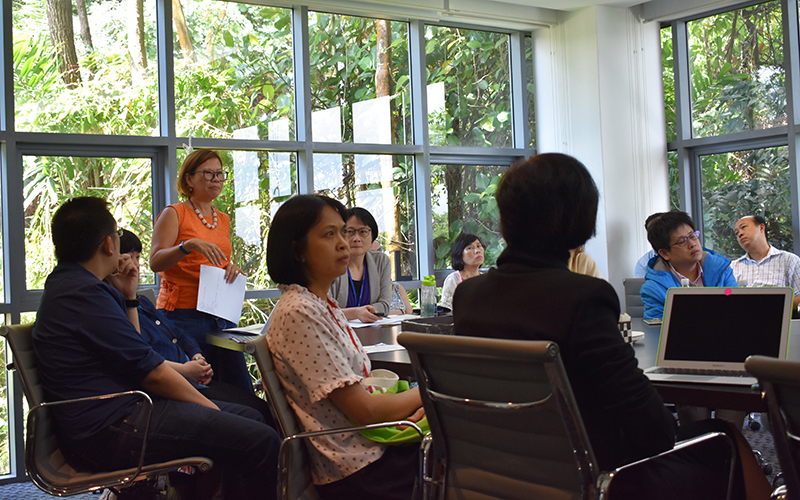
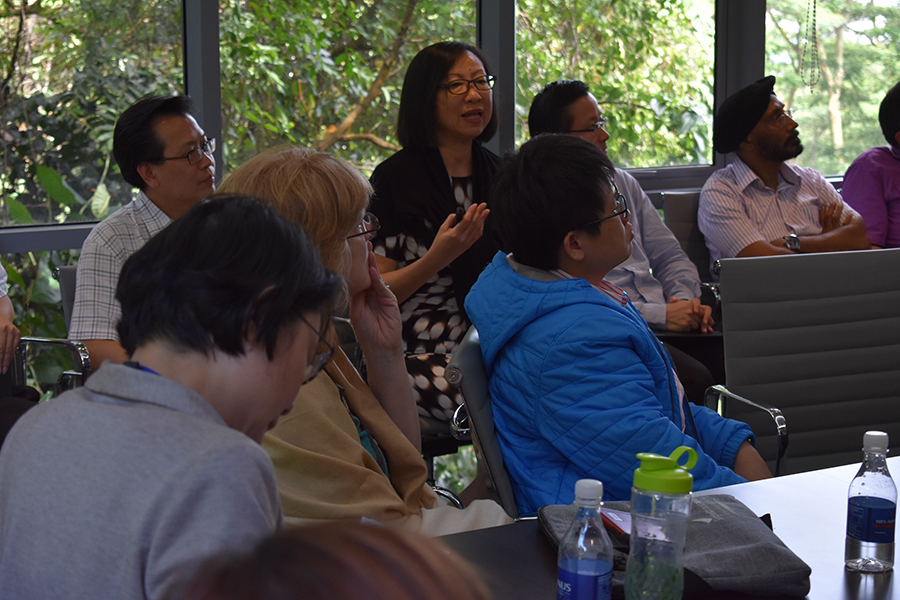
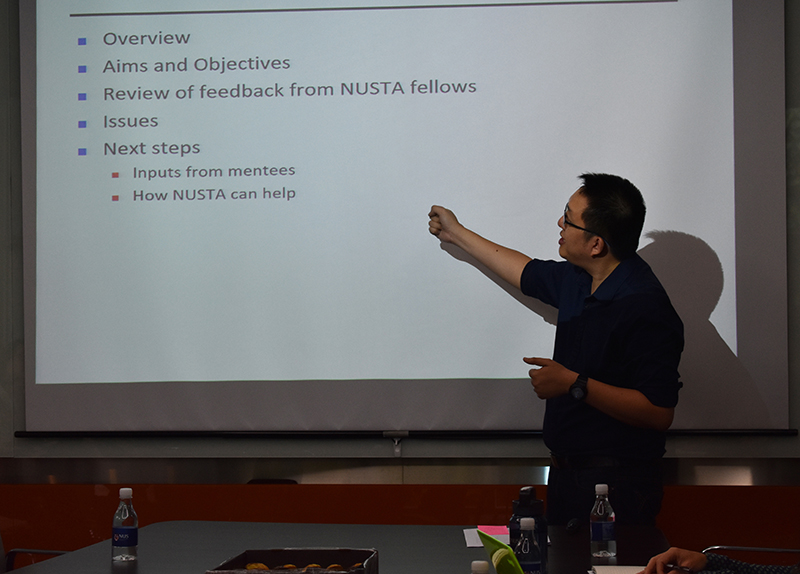
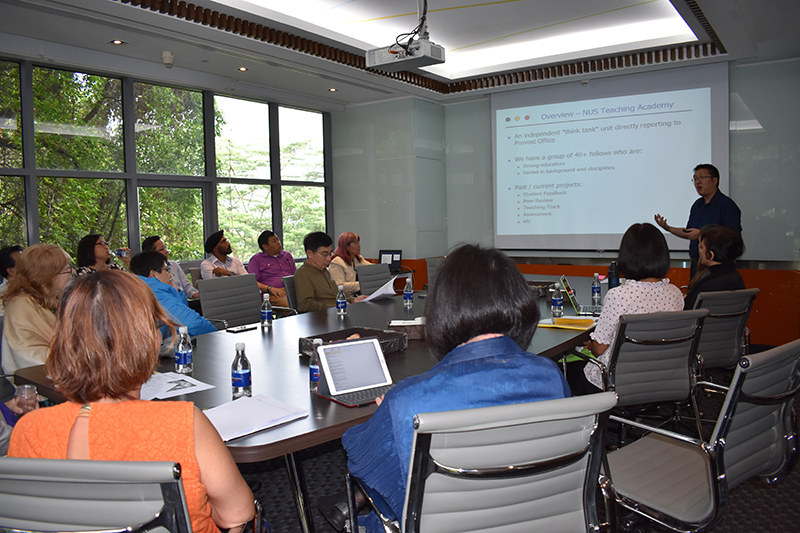
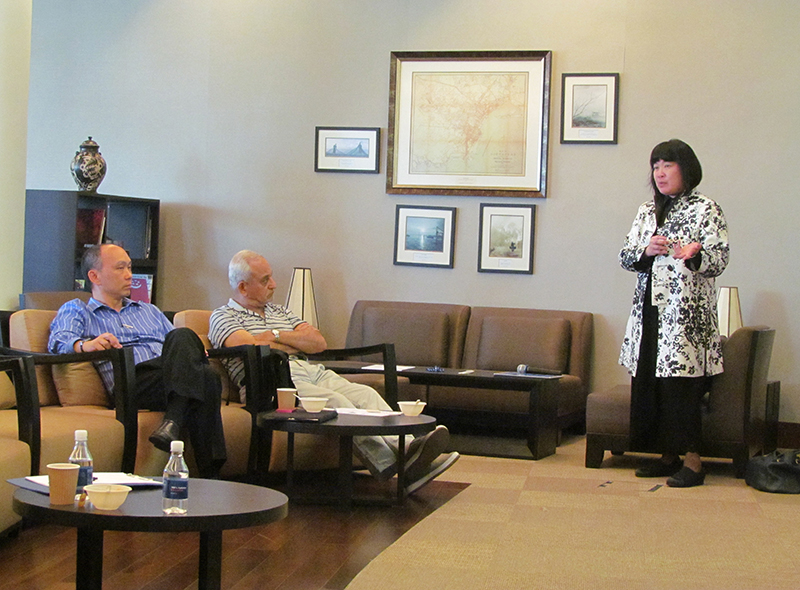
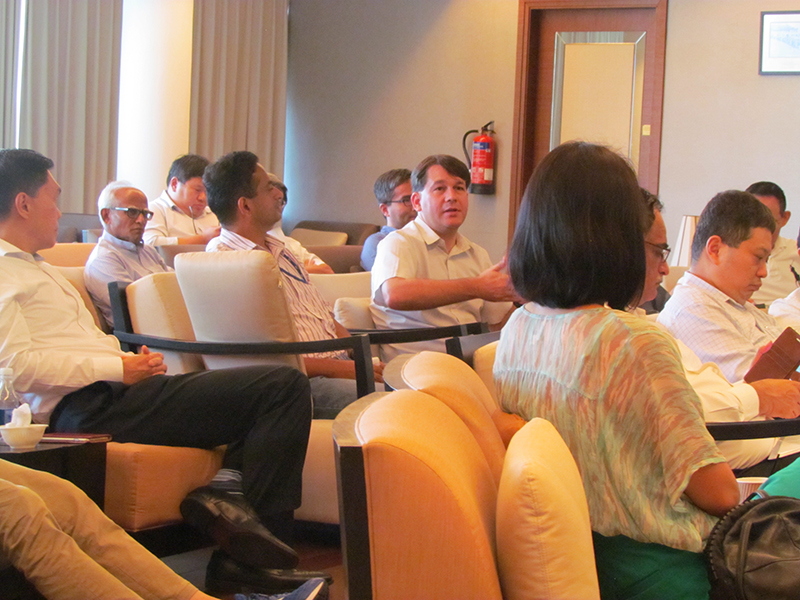
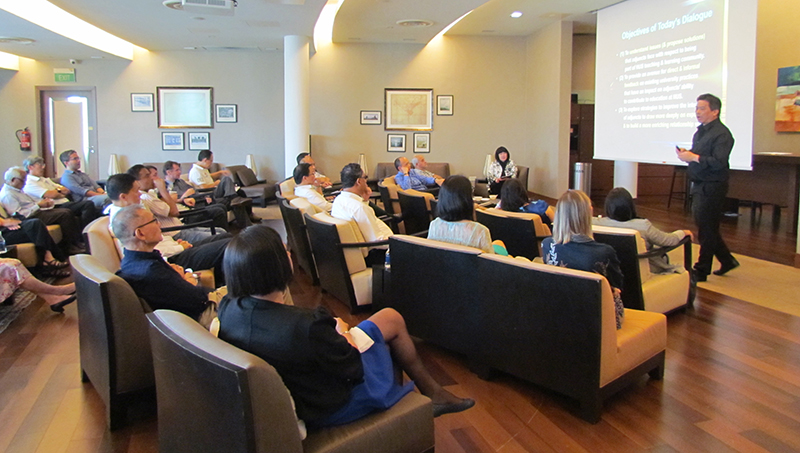
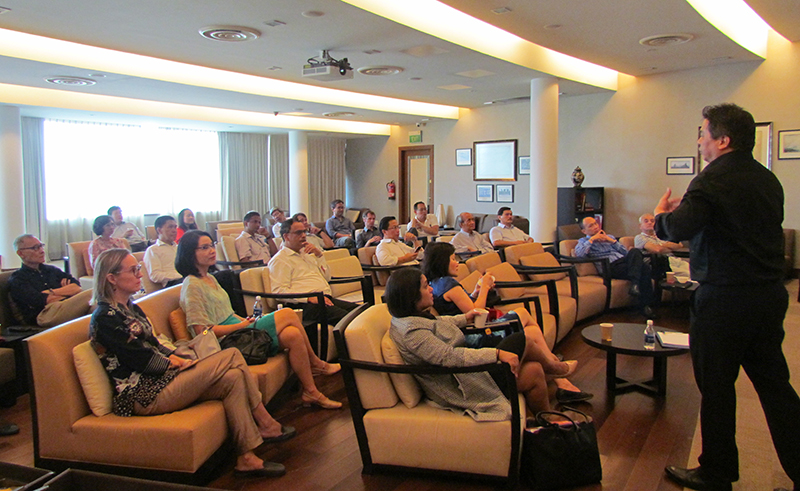
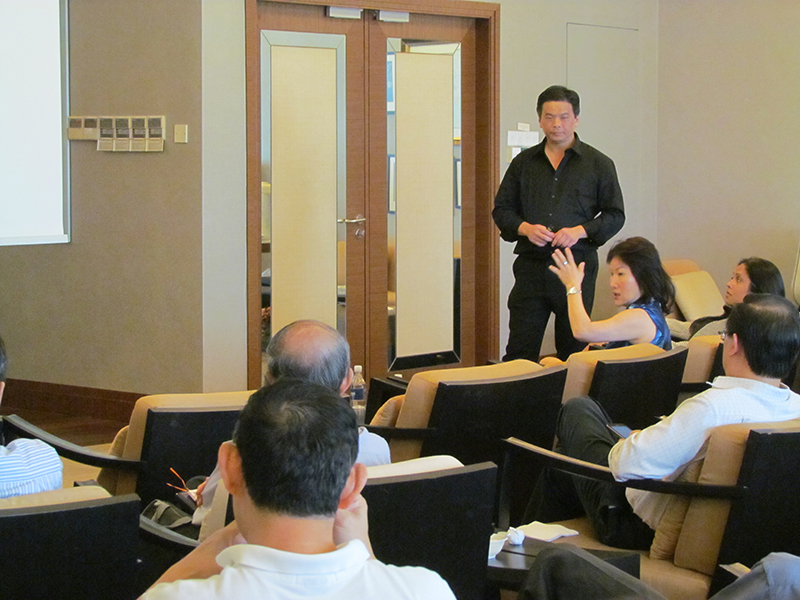
The Academy organizes Teaching and Learning Club (TLC) sessions to connect with our Teaching and Learning community, and to fulfil our vision of providing an authentic voice on Teaching and Learning. Through reaching out to and hearing the voices of our broader NUS teaching community, the Academy can highlight matters of concern, and function as ambassadors and connectors between university management, colleagues and students.
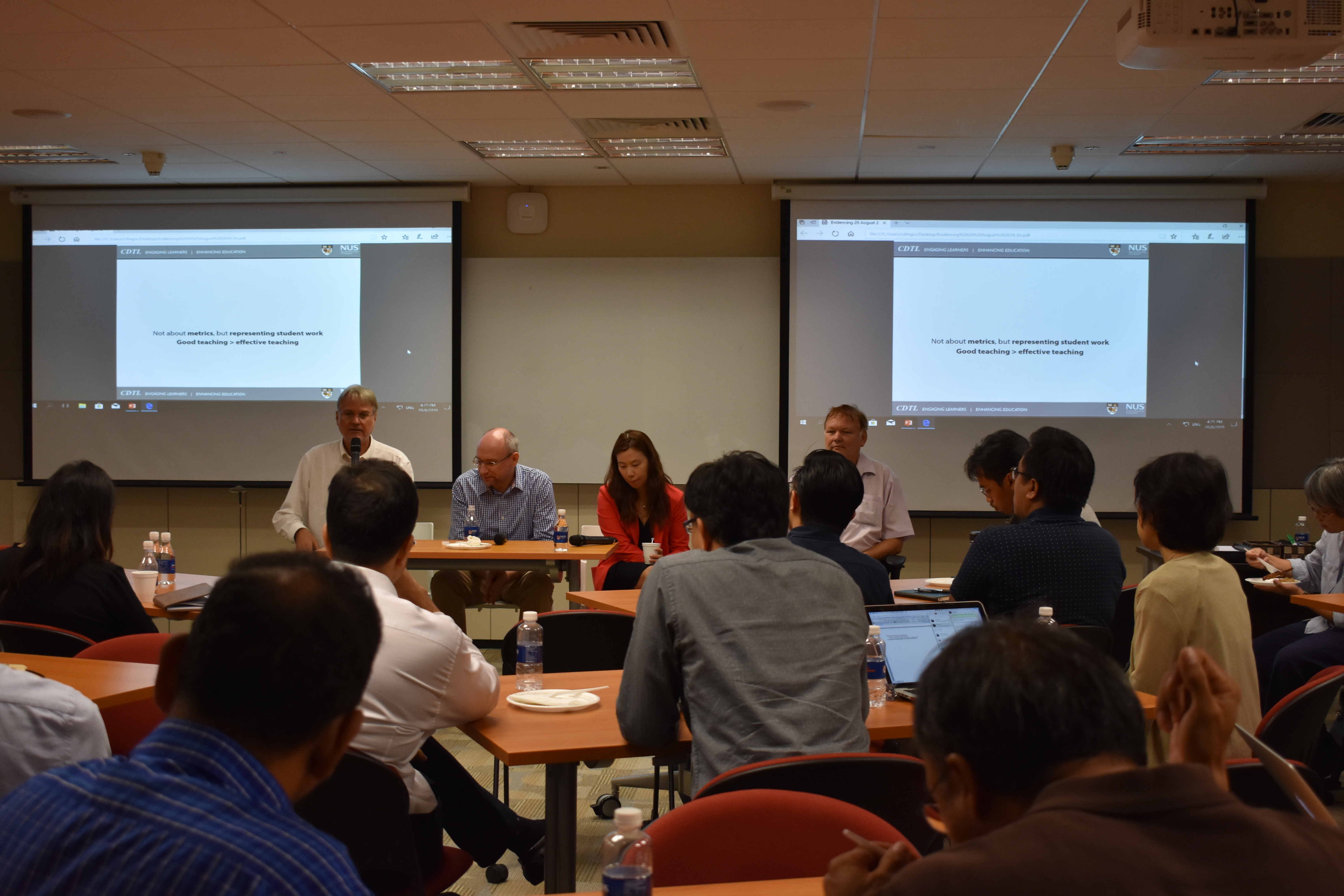
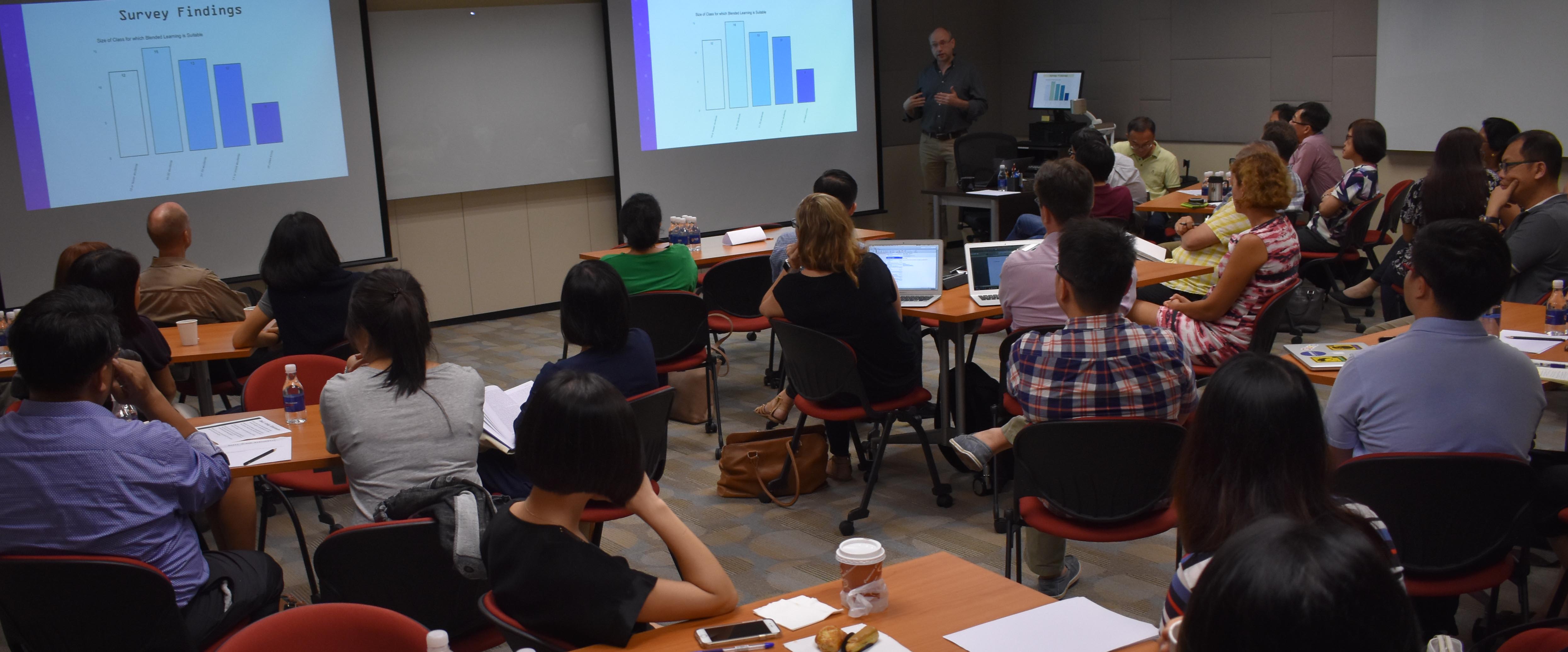
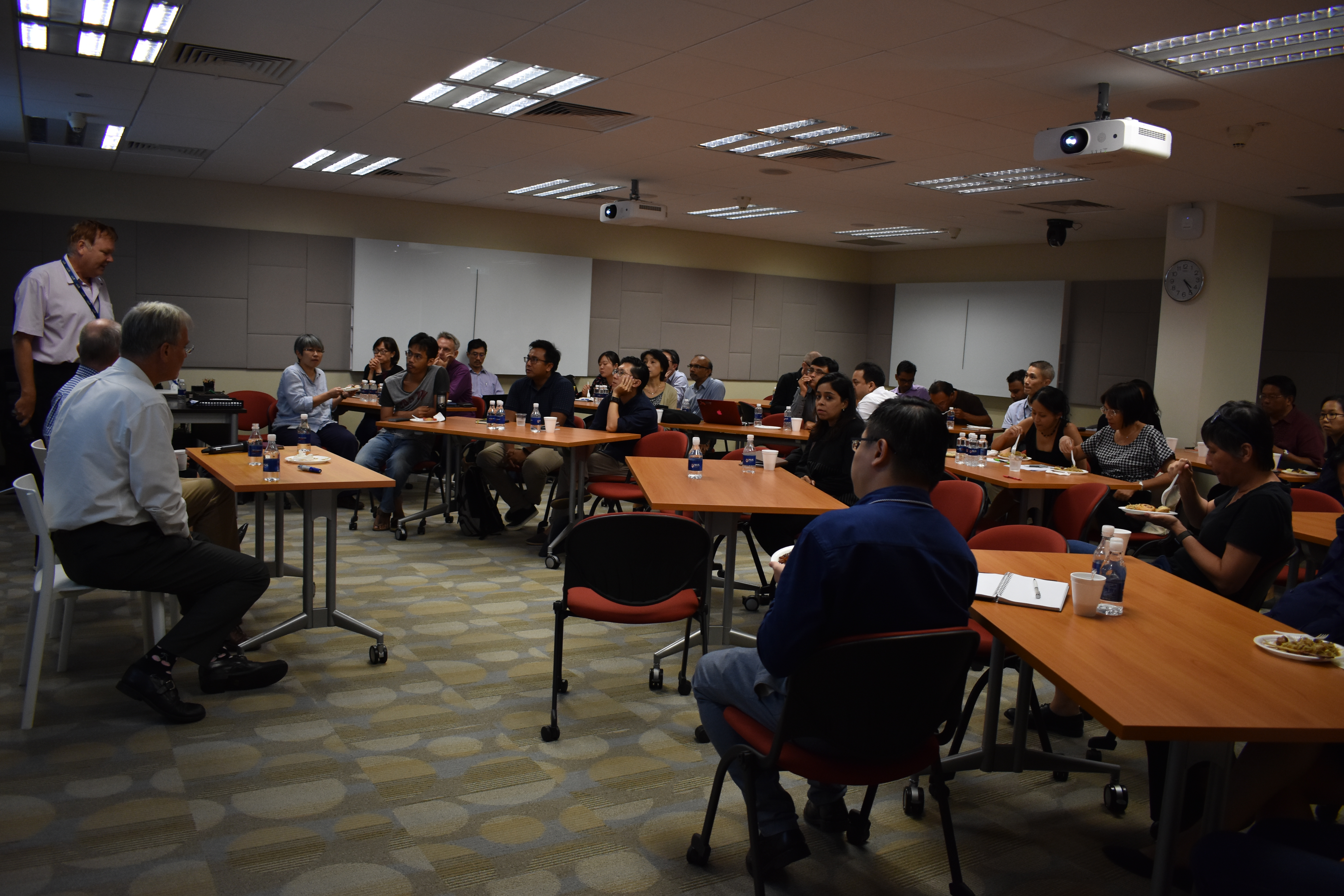
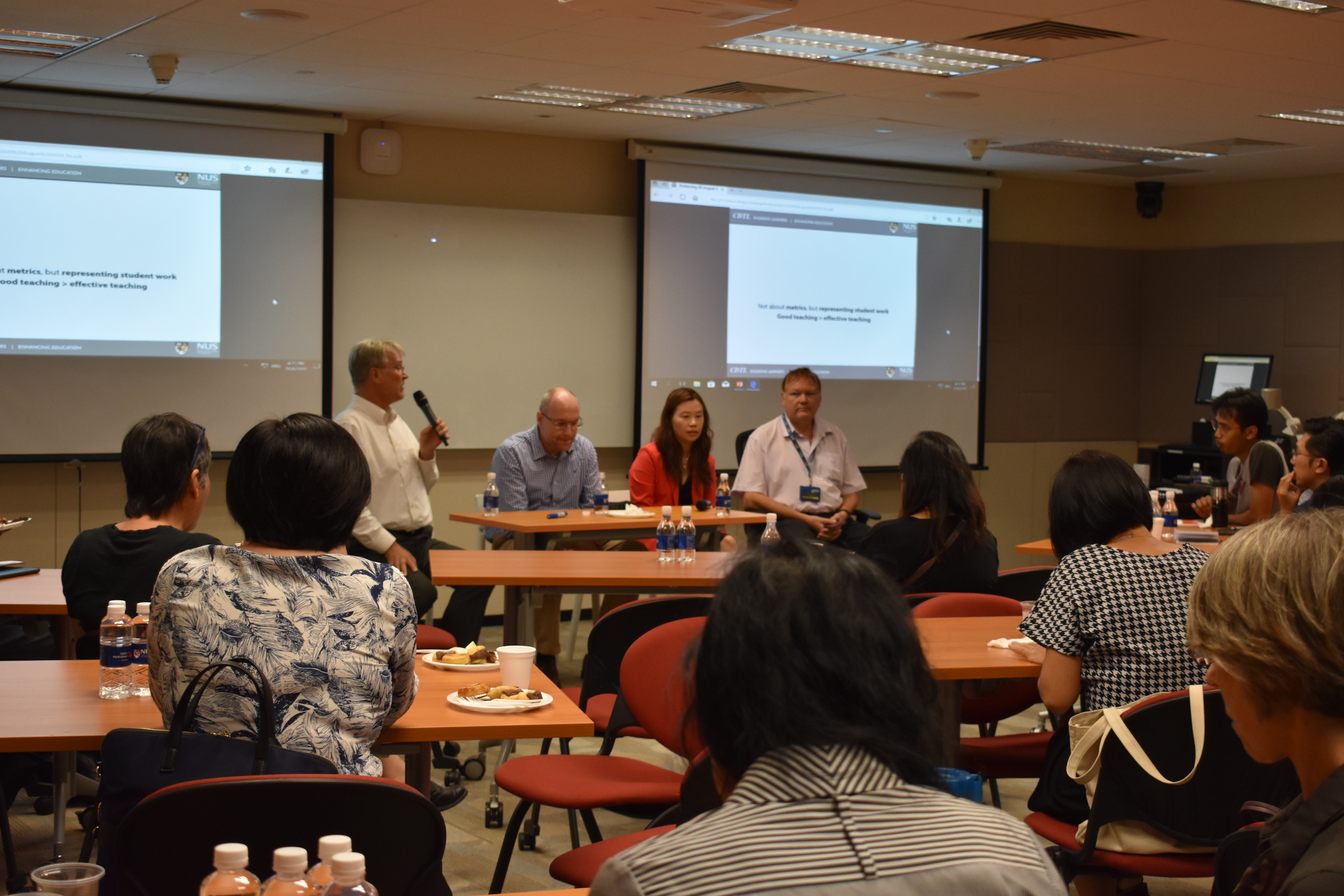
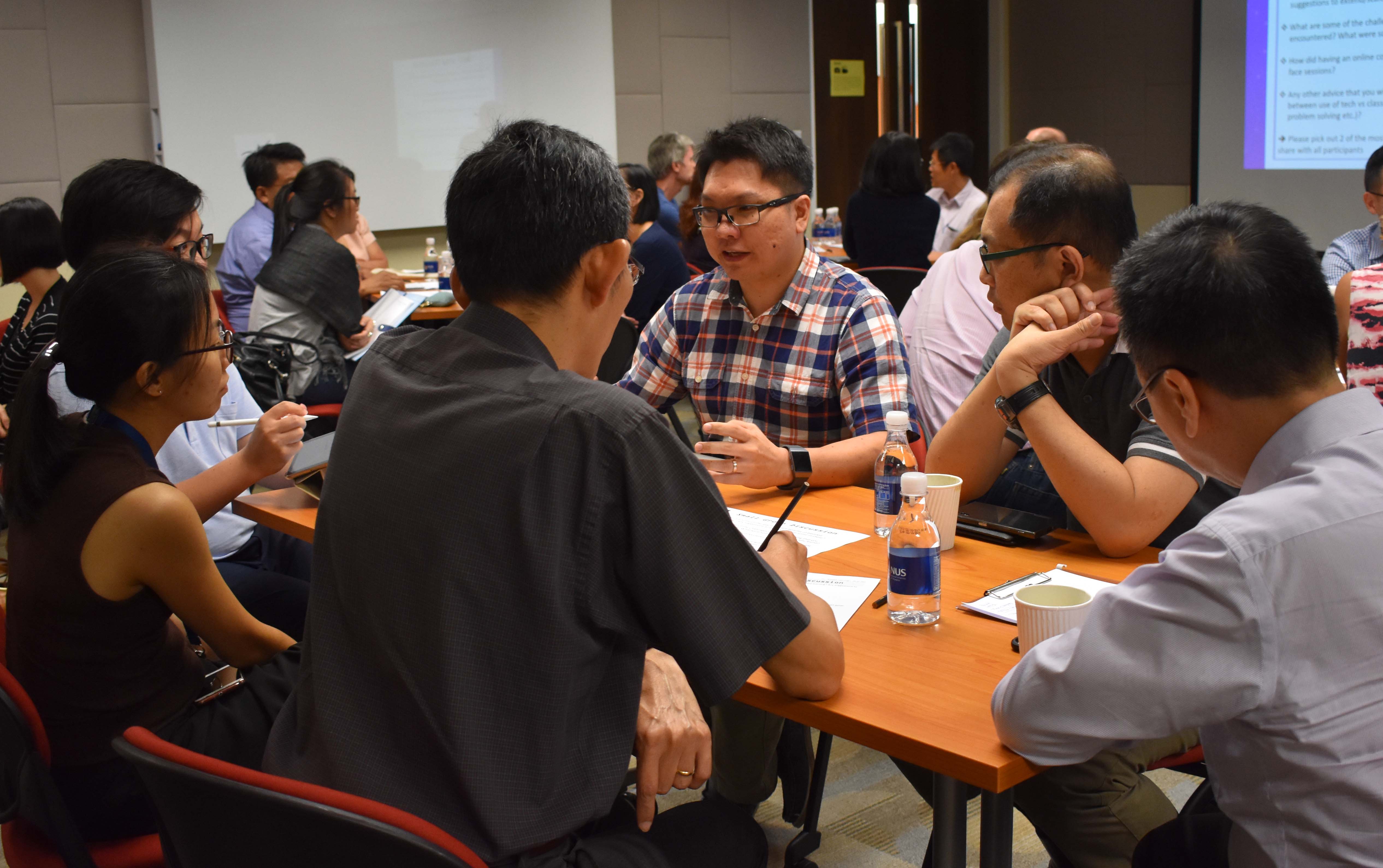
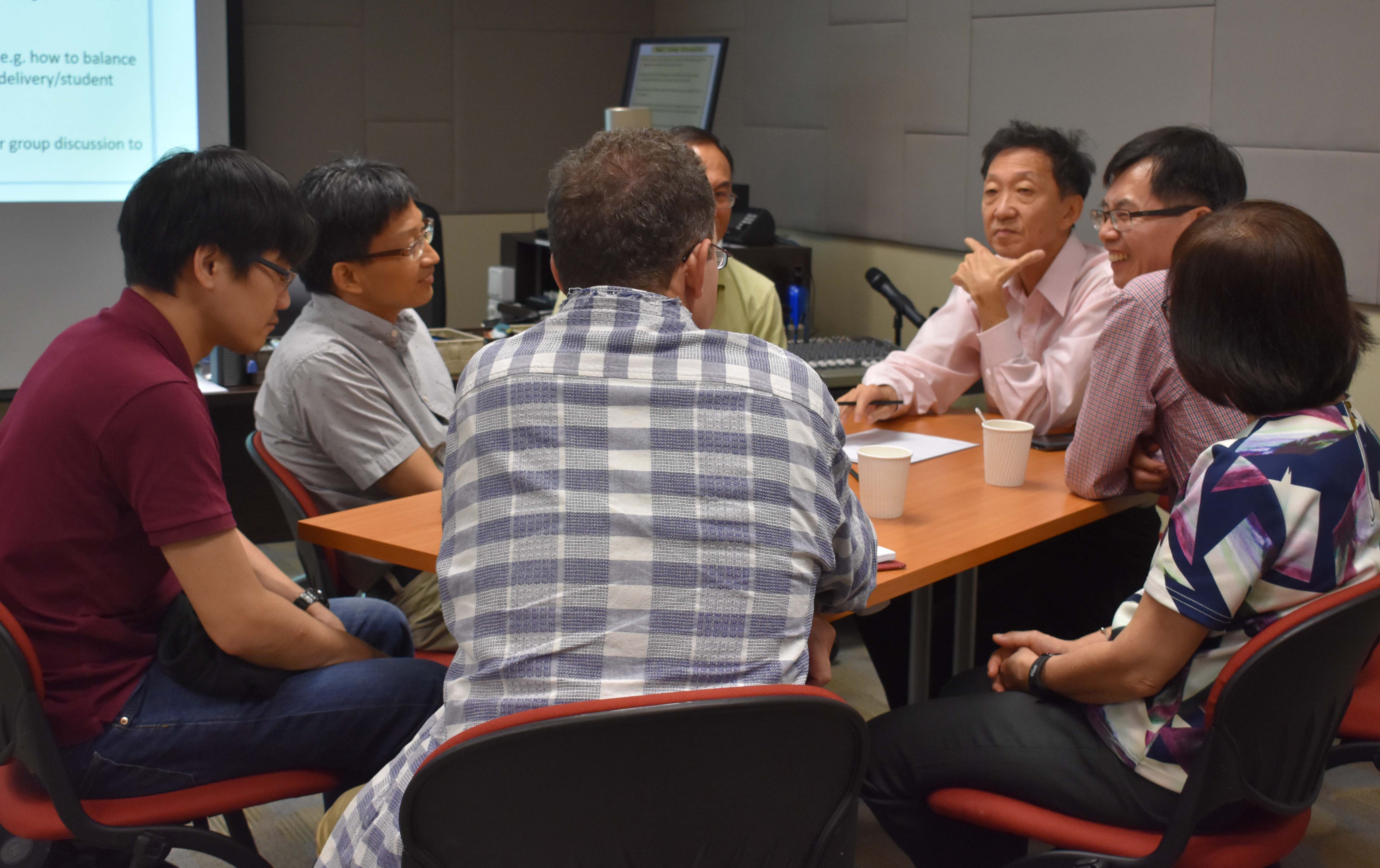
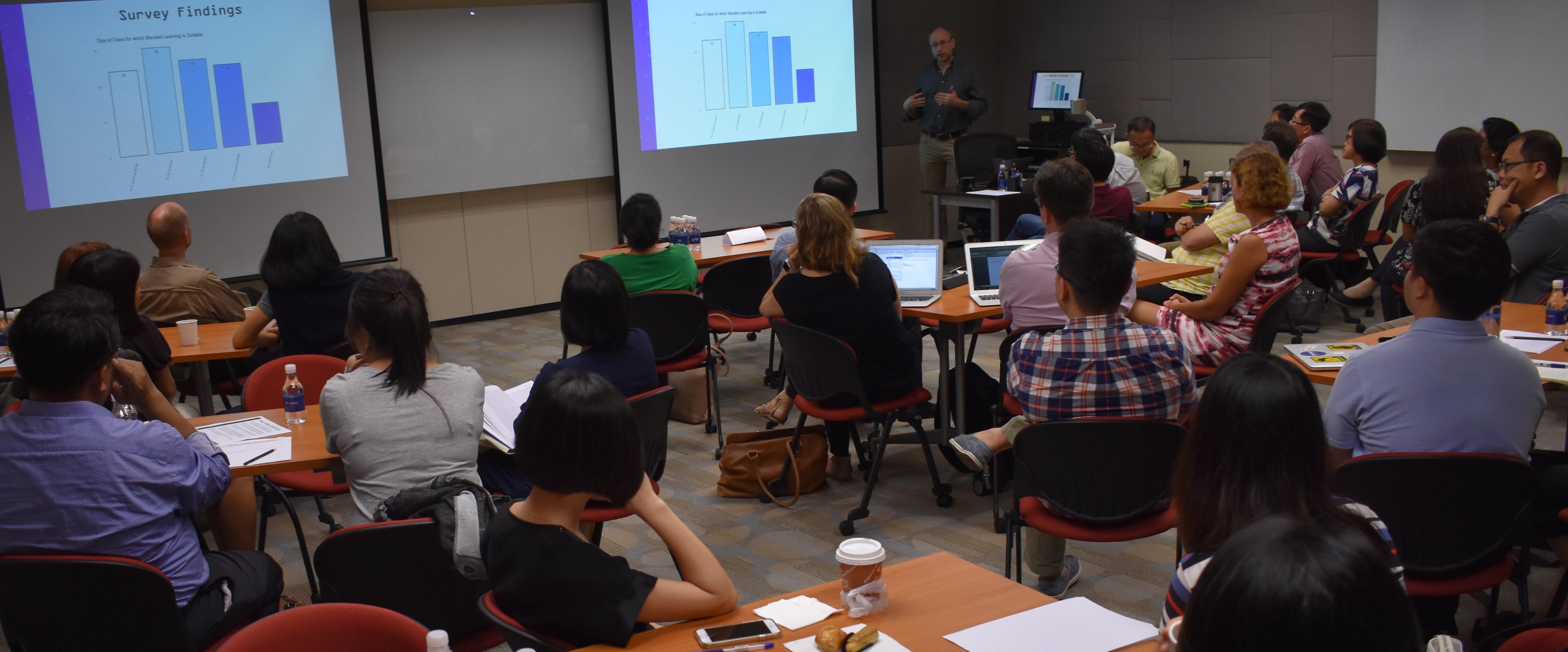
Conceptualised and facilitated by Fellows – Ryan Bettens, Olivier Lefebvre, Tan Wee Kek and Yeong Foong May, the TLC was held on 20 August 2019, and was well-attended by 54 faculty members (including 17 Fellows). A pre-discussion survey was used to find out participants’ perceptions about student learning and challenges with evidencing learning, and findings were shared.
The invited panelists were
Adrian Michael Lee (NUSTA Fellow, CDTL Deputy Director, OEA winner 2017) – Documenting Failure to reflect on and improve teaching with research-informed interventions.
Brenda Yuen (CELC faculty) – Rubric application and validation as a means to evidence student learning with the added benefit of consistent & clear articulation of ‘quality’ for tutors’ grading and students’ understanding of expectations. The rubrics also helped students engage in self-assessment and self-improvement.
Johan Geertsema (CDTL Director, OEA winner 2013) – CDTL Support to help colleagues evidence student learning. He clarified numerous issues/nuances pertaining to the evidencing of effective university teaching, including but not limited to measurements of student experience, peer evaluation, personal reflective narratives of growth, programme evaluation and more holistic approaches to student learning.
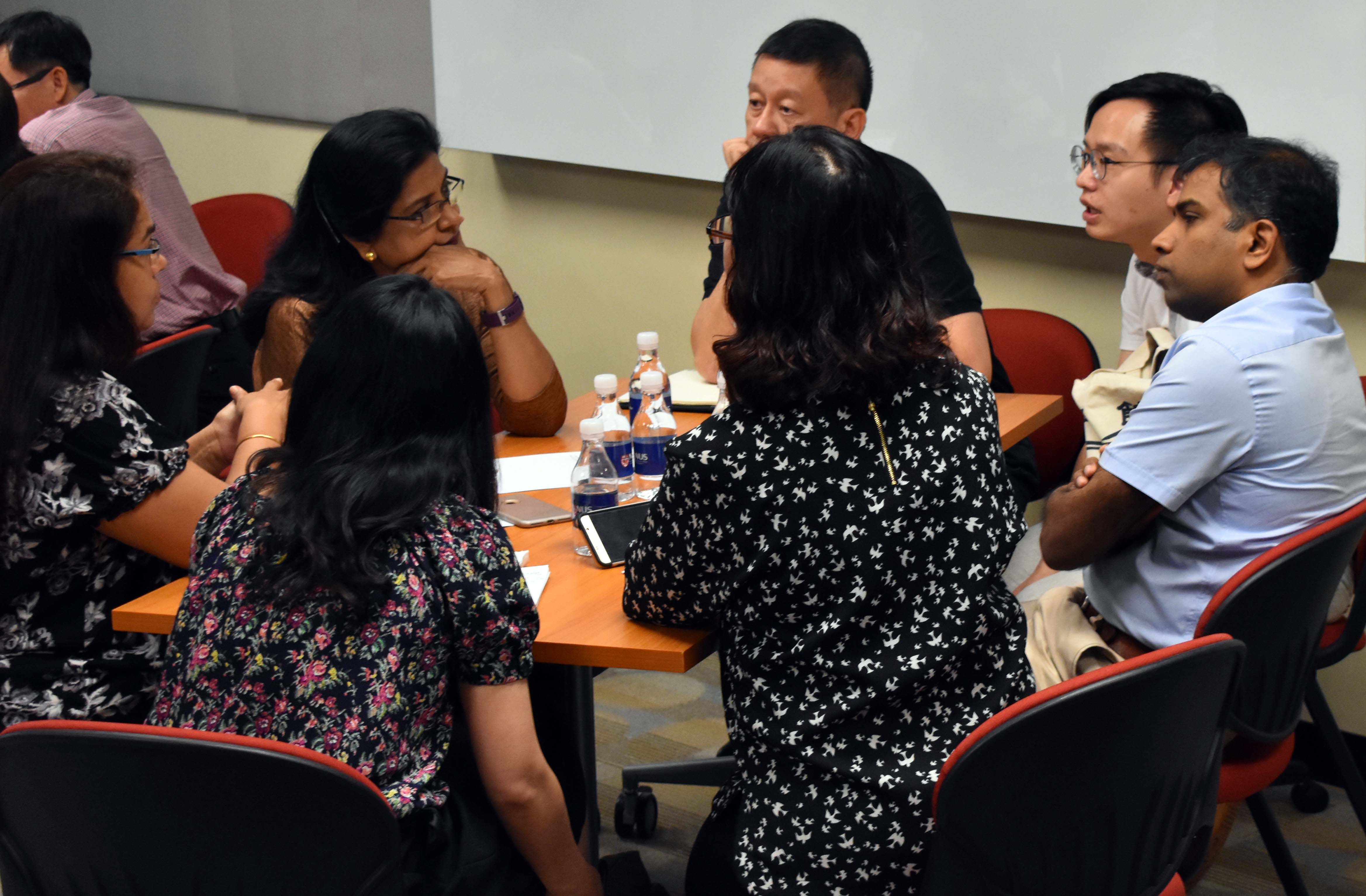
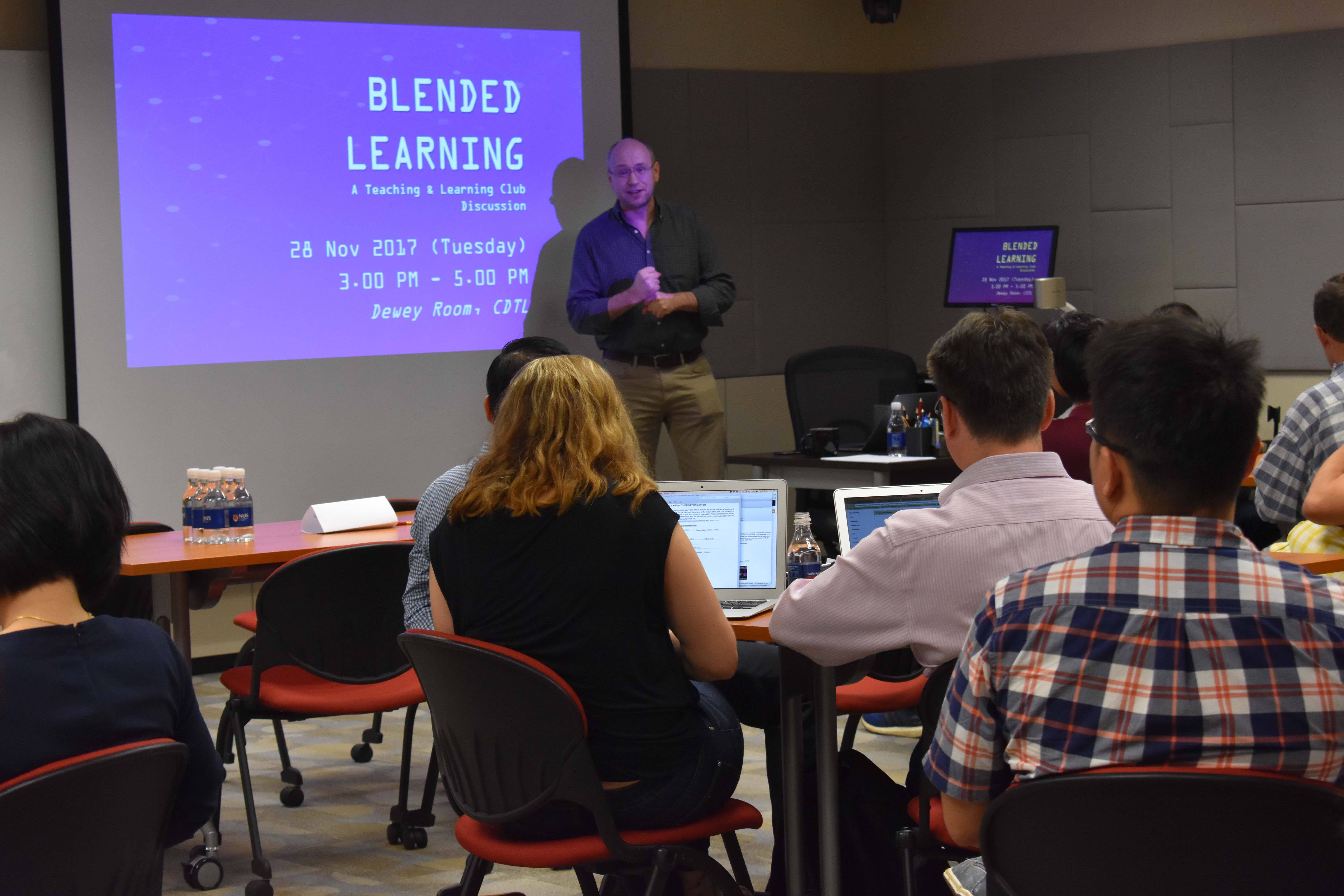
The TLC on Blended Learning was open to the Teaching Community and well-attended by diverse faculty, many of whom had done blended learning. It was led by Academy Fellows, Dr Adrian Lee and Prof Seah Kar Heng, and facilitated collaboratively by Fellows who have engaged in blended learning themselves.
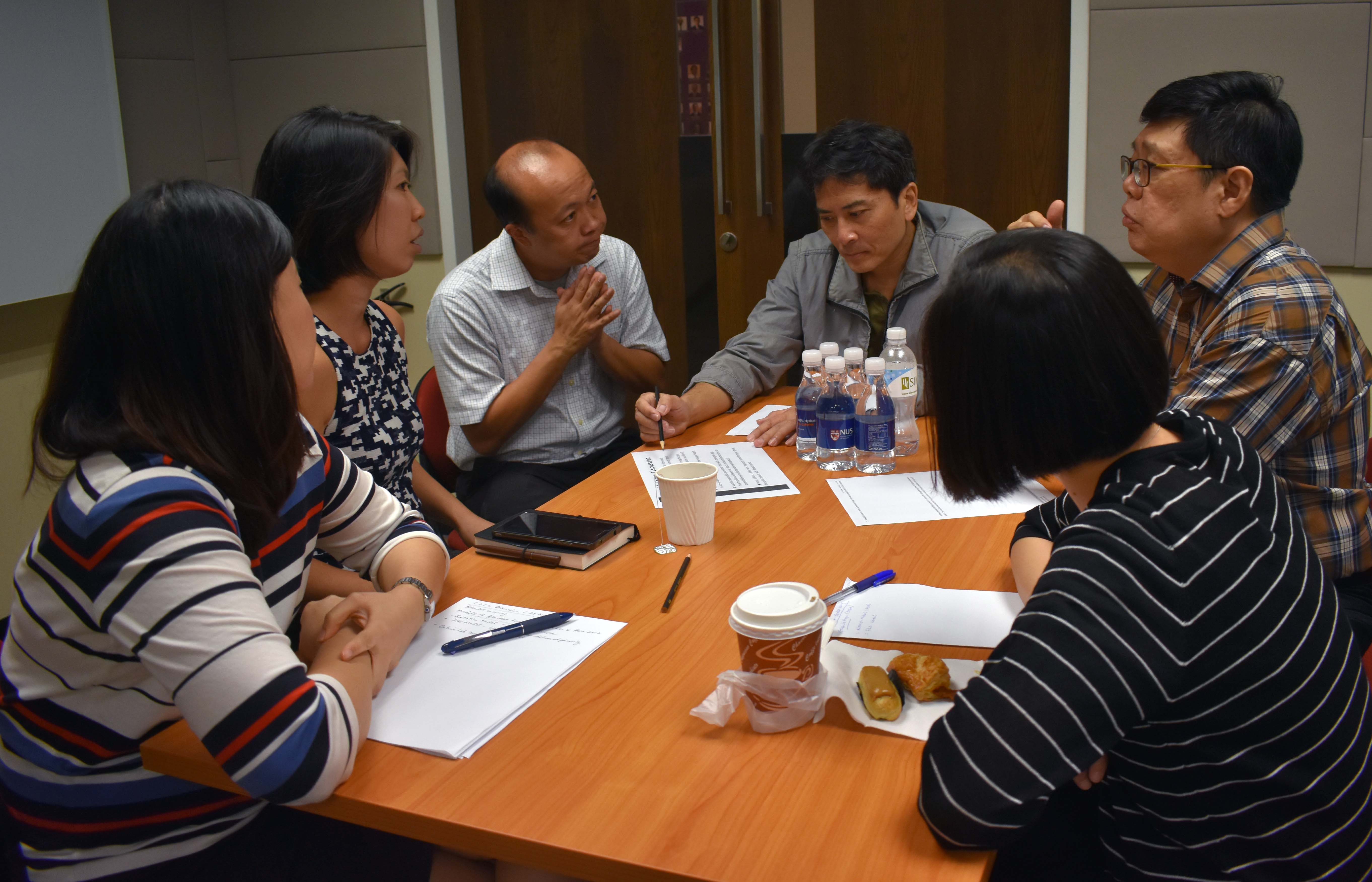
Besides gaining a quick overview of how blended learning had been implemented by colleagues (e.g. models of blended learning, portion of course time spent online, resources used etc.), participants discussed both the benefits and challenges of using blended learning for different disciplines and for different student types.
In particular, participants shared that blended learning supported both pre-class content delivery and post-lesson follow-up additive learning activities, allowing more face-to-face class time to be used for collaborative work, on-site experiential learning of 3-D models, architecture, culture/heritage, and tutor-student interactions for direct clarification / explanations and skills development. Examples of blended learning used ranged from simple resources such as short videoclips and useful learning platforms to more resource-intensive formats such as games and VR experiences.
Although not all students were initially receptive to non-traditional lesson formats, a significant proportion became more accepting after gaining more positive learning experiences through blended learning. Participants noted that before students accepted the change in pedagogy/blended learning, some initial conversation to help students think about how they do learning was needed. In addition, it was important to carefully consider the quantification vs. teaching quality of teaching hours. The course structure (integrating blended learning with face-to-face lessons/lectures) also needed to be mindful of overall workload, term times and motivation techniques such as quick quizzes or peer work.
For the detailed collation of this TLC’s findings, interested faculty can request for the notes from the NUS Teaching Academy Office – cdtngcc@nus.edu.sg. The Academy will also continue to listen, so please do send feedback to us.
The fully-subscribed TLC session brought together NUS teaching faculty to critically examine the contextualization of generalisations about Millennial and Generation Z youth characteristics to our student body. Academy Fellows, Associate Professors Ashwin Khambadkone (FoE), Ho Han Kiat (Fos), Teo Chiang Juay (FoE) and Professor Wong Nyuk Hien led the discussions.
Besides articulating challenges faced, such as changes in students’ attention span, techno-literacy and multidimensional learning, participants candidly shared insightful observations about what students increasingly preferred as well as their changing reactions to teaching methods. The core values, principles and key outcomes of NUS’ educational philosophy were also considered, in addition to brain plasticity, the influence of emotions on learning and the value of some stress and intellectual discomfort.
Successful teaching strategies to engage students in sustained deep learning were shared by participants from diverse disciplinary backgrounds. There was also discussion about how Millennial and Generation Z students’ needs and issues could be addressed while upholding core principles that would help with their future employment in a VUCA working world.
The discussions were collated into a report on possible pedagogical takeaways. Faculty members interested in more detailed notes, please request from the Teaching Academy Office – cdtngcc@nus.edu.sg.
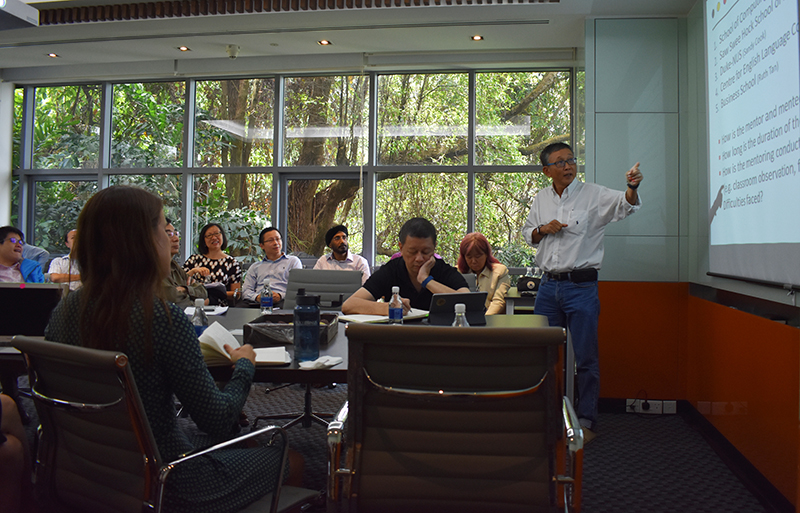
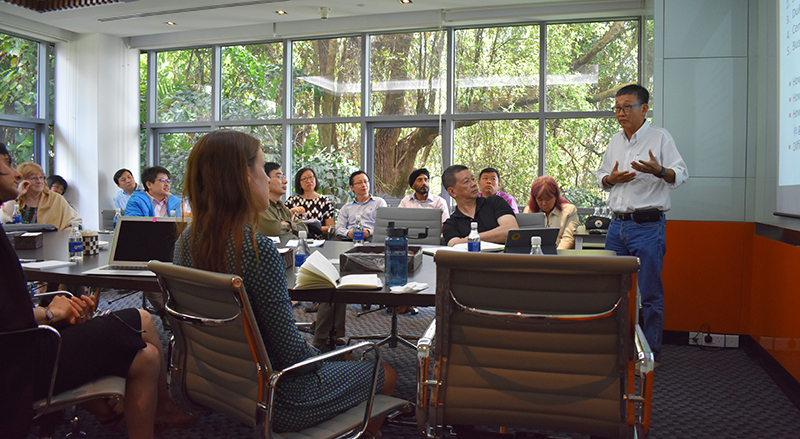
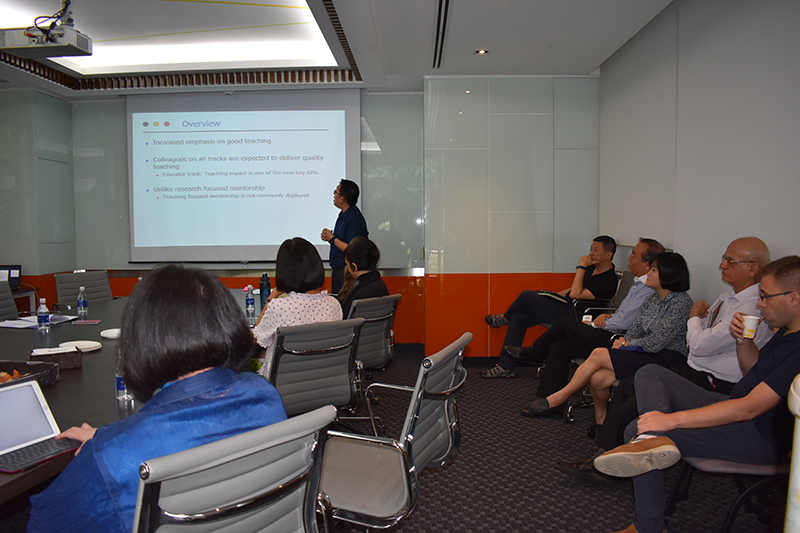
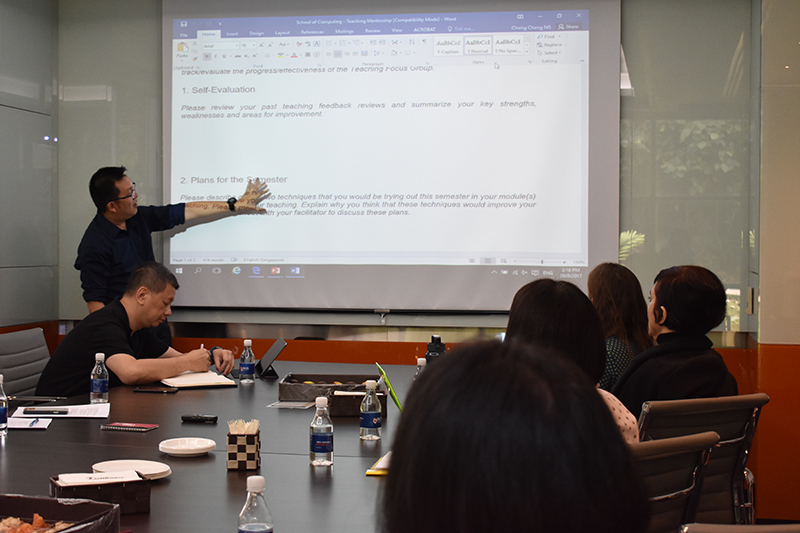
The Roundtable on Teaching Mentorship was convened to understand the state of teaching mentorship across NUS, to identify and share issues and best practices, and to explore possible synergies. Mentorship programme leaders from diverse faculties/ schools were invited to join in the sharing and discussions, led by Academy Fellows Professor Willie Tan (Building, SDE) and Dr Soo Yuen Jien (Computer Science, SoC).
Willie started by sharing the Academy Fellows’ initial consensus that there was wide variation in mentorship across our institution and that research-mentorship vs. teaching-mentorship were not always well-differentiated. Representatives from School of Computing, Saw Swee Hock School of Public Health, Duke-NUS Medical School (AM.EI), Centre for English Language Communication and Business School then kindly shared on teaching mentorship within their schools/departments. In particular, the following were discussed:
• Selection of Mentors
• Selection of Mentees
• Duration of Mentoring
• How it works
• Issues
• Suggestions
Several critical concerns were discussed and the Academy received confirmation that further resources and recommendations would be welcome. The Teaching Mentorship Sub-committee (comprised of a team of Academy Fellows) was hence formed after the Roundtable and the Subcommittee members have embarked on pulling together evidence-based recommendations on Teaching Mentorship for the NUS Teaching community.
Topic: Our Adjunct Faculty: Integral and Indispensable
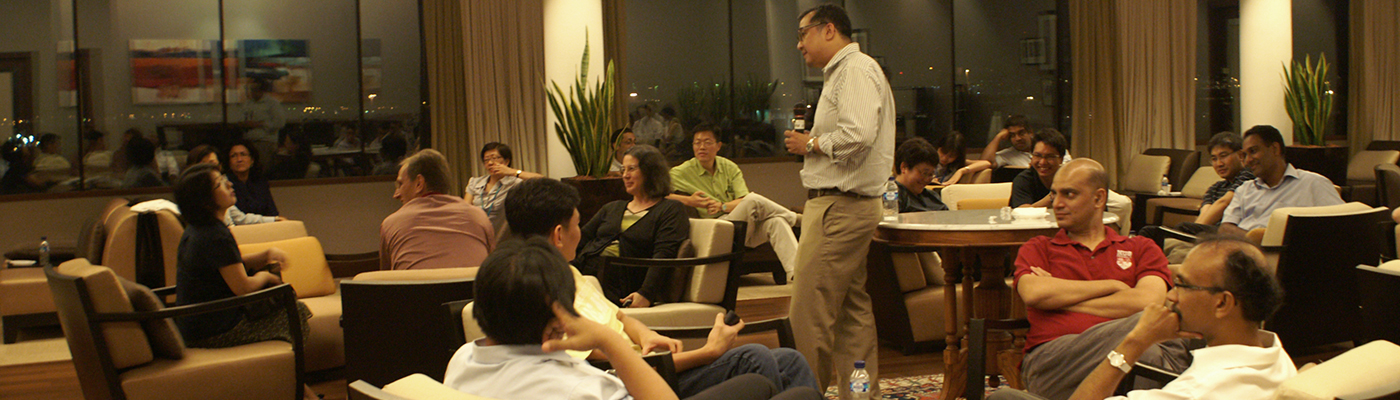
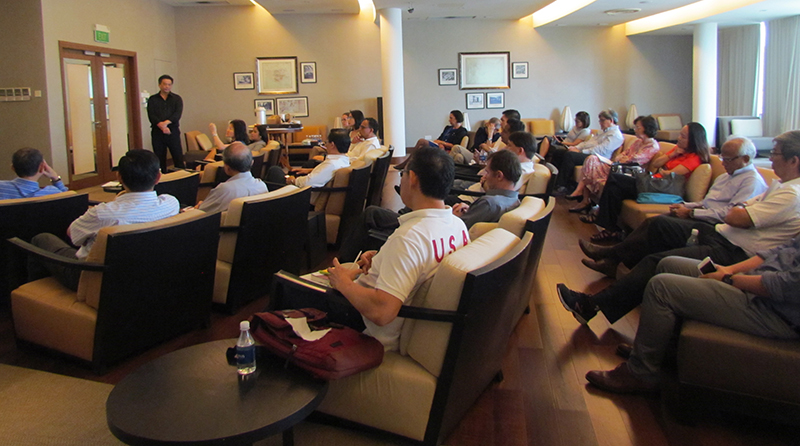
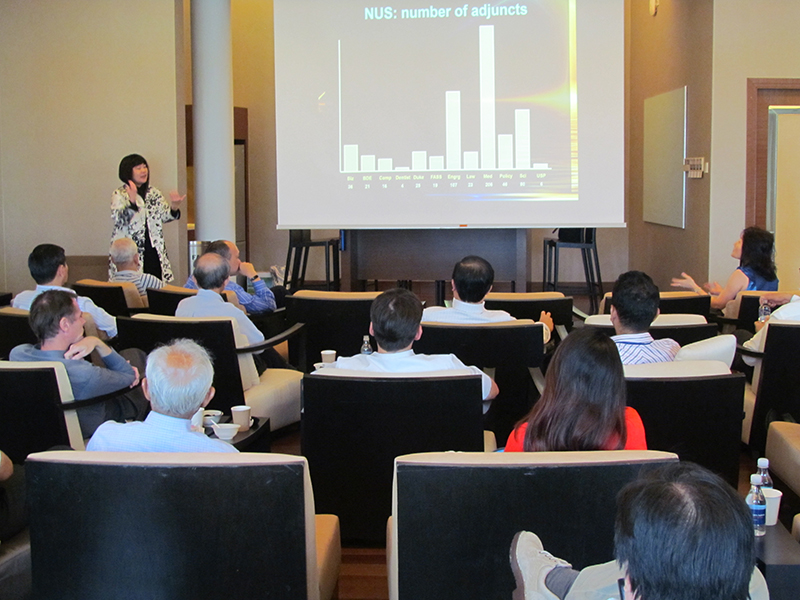
The Teaching and Learning Club discussion “Our Adjunct Faculty: Integral and Indispensable!” was mooted and chaired by Academy Fellows – Associate Prof Heng Cheng Suang and Dr Susan Ang. Held on 23rd March 2017, the TLC sought to ascertain how adjunct faculty presence could be ‘optimised’ to provide an enriching experience for all – departments, students and themselves. It was met with delight by many adjunct faculty who expressed appreciation for the opportunity to engage in such dialogue.
Before the TLC discussion, a preliminary survey was sent to almost all adjunct faculty from all NUS faculties/schools, and the results of the survey were compiled and shared with the participants in the TLC. As the Academy’s main function in this TLC was to serve as facilitator and conduit for adjunct faculty members’ perspectives and concerns, we have recorded all the major concerns raised – i) Teaching, ii) Research, iii) HR and iv) other general issues. However, as all non-teaching-related issues e.g. HR-related, have been conveyed to the relevant entities in NUS, this article will focus on the Teaching-related issues.
The pre-discussion online survey and the discussion itself made salient the following:
• To optimize utilization of adjunct faculty expertise, a significant minority felt that departments could give more consideration to modules/topics of interest suggested by adjunct faculty. In particular, those adjunct faculty who are also working professionals might be able to offer current perspectives on the basic knowledge or adequate foundation required of young graduates in their professions (i.e. they could contribute to curriculum design). There were also opportunities for the cross-fertilisation of departmental curricula or the development of cross-faculty curricula;
• To support adjunct faculty better in teaching, resources such as (i) dedicated mentors to help orientate them to departmental practices/guidelines; (ii) library resources and access know-how; (iii) designated work space/ computing/wifi access; (iv) funding; (v) updates on new pedagogies & teaching technologies; (vi) more varied feedback on their teaching, could be made more easily accessible.
• To boost adjunct faculty morale (and hence indirectly enhance quality of teaching), there could also be consideration of (i) more dedicated recognition such as teaching awards for adjunct faculty; (ii) more standardisation of adjunct-related practices across faculties, and (iii) more opportunities for adjuncts to engage in dialogue with adjunct faculty peers and university administration. In addition, as it was the adjunct faculty who are semi-retired or former members of the department that derived the most satisfaction and the strongest sense of social and professional integration from their adjunct arrangements, other adjunct faculty could likely benefit more from conscientious integration efforts by NUS and departments.
Following the TLC, the results of both the survey and discussion have been presented to the Teaching Academy, the Academy Executive Committee, Provost’s Office and other relevant entities in NUS. We appreciate the constructive inputs by all adjuncts who have participated and believe that appropriate follow-up actions will be taken to address concerns raised. We hope that through the sharing of concerns and best practices, this TLC will indeed bring about improvements to the optimization of adjunct faculty expertise and teaching